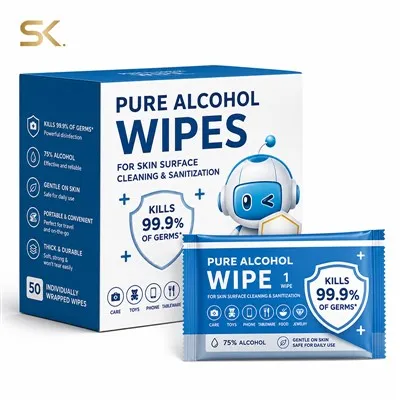


The mechanism of action of disinfectant wipes is primarily based on the ability of their active ingredients to kill or inhibit microorganisms. These disinfectant components disrupt the vital processes of microorganisms through various mechanisms, ultimately leading to their death or the loss of their reproductive capacity. The disinfectants commonly utilized in disinfectant wipes fall into the following main categories:
Alcohols (e.g., ethanol, isopropyl alcohol): Alcohol-based disinfectants penetrate the cell membranes of microorganisms, disrupting their structural integrity. This leads to the leakage of intracellular contents, rendering the microorganisms non-viable. Additionally, alcohols can interfere with the enzymatic systems of microorganisms, thereby blocking their normal metabolic processes.
Hydrogen Peroxide: Hydrogen peroxide possesses strong oxidizing properties, enabling it to directly attack biological macromolecules-such as proteins and nucleic acids-within microorganisms. By rendering these molecules inactive, it effectively achieves a bactericidal effect.
Chlorhexidine: Also known as Chlorhexidine gluconate, this agent binds to cationic sites on the cell membranes of microorganisms. This interaction alters membrane permeability, facilitating the leakage of intracellular contents and thereby preventing the microorganisms from surviving normally.
Quaternary Ammonium Compounds: This class of compounds adsorbs onto and penetrates the cell membranes of microorganisms. By altering the ion concentrations across the membrane, they induce an intracellular electrolyte imbalance, leading to functional impairment or even death of the microorganisms.